Tips for the production of Visual Dispensing Machine for sticker products | WELDO Visual Dispensing Machine Operation Dodge Guide
WELDO has many customers around the world who produce sticker products, such as Canada, Mexico, Brazil, Russia, the United States, Poland, Japan, Turkey, Colombia, etc. All of them are using our Visual Dispensing Machine for production.
Whether it's self-adhesive stickers, label stickers, decorative stickers, or hardware sticker accessories, all benefit from the Glue Dispenser Machine to enhance efficiency.
When many customers first install the machine or rush to complete large orders, problems such as glue overflow, glue leakage, sticker displacement, and poor curing often occur. This not only wastes glue but also delays the delivery date. Based on the extensive experience of WELDO engineers in training customers' factories on operating visual dispensers, this article will clearly explain the key issues that need to be paid attention to throughout the sticker dispensing production process.
1. Adhesive tape materials and fixtures
The material of the adhesive tape is soft. When using thin PVC, transparent PET, or paper-based adhesive tapes, they tend to stretch and deform easily under force.
Before using WELDO's Precision Dispenser, the working platforms of both sides should be cleaned thoroughly to ensure no residual glue or dust. Place the adhesive tape flat on the aluminum plate and fix it evenly using a strip or vacuum suction. There should be no wrinkles or curled edges.
If making continuous roll-type adhesive tapes for mass production, the feeding speed should match the dispensing rhythm of the equipment. If the feeding speed is too fast, the adhesive tape will be pulled, causing deviations in the coordinates captured by the camera of the AB glue Epoxy dispensing Machine and resulting in incorrect dispensing positions. 2. Adhesive Materials and Squeegee Parameter Settings
Sticker products have very high requirements for controlling the amount of glue. If there is too much glue, it will overflow and contaminate the surface of the sticker. If there is too little glue, it will not stick firmly and may come off.
WELDO's
glue dispensing systems support the setting of precise dispensing quantity, dispensing speed, dispensing height, dispensing pressure and other parameters, which can be adapted to different products.
The type of adhesive should be selected based on the sticker material. For example, transparent epoxy resin and UV glue can be used for paper stickers, while low fog UV glue should be chosen for transparent PET stickers to avoid yellowing of the sticker after adhesive curing. The adhesive storage environment should be kept at a constant temperature. Low-temperature adhesive will thicken, leading to uneven adhesive dispensing.
Before mass production, the heating time on the
sticker doming machine can be set in advance to preheat the adhesive.
3. Product Solidification and Storage
After the dispensing process is completed, the solidification and storage of the stickers are also very important.
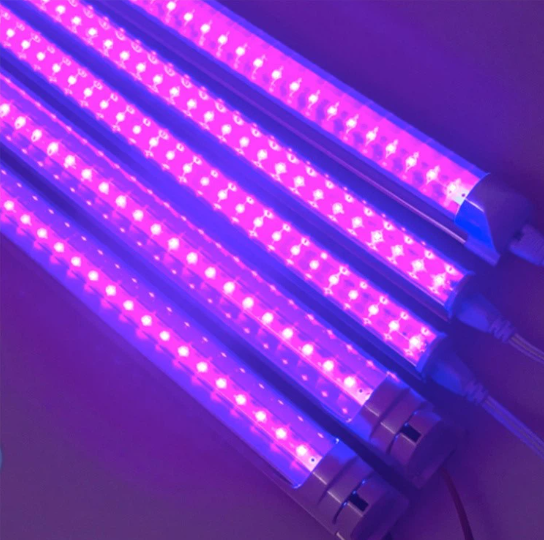
The curing of stickers requires strict control over the curing power and the duration of irradiation. It is necessary to avoid the situation where the adhesive force is insufficient if the curing time is too short, or the stickers turn yellow and become brittle if the curing time is too long. Slow-drying glue that has been dispensed at room temperature cannot be stacked immediately. If squeezed while still wet, the stickers will stick to each other.
In addition, after the completion of dispensing, semi-finished products should be stored in a humid environment in the workshop, which will reduce the adhesion of glue, and the stickers will fall off and be reworked in the later stage, increasing labor costs.
4. Daily Maintenance and Cleaning
If equipment maintenance is neglected during long-term production orders, the failure rate of the
ab glue dispenser machine will continue to rise, delaying the delivery of sticker orders.
UV resin doming machine relies on high-definition camera to locate the contour of the sticker, and the dirt of the lens will directly affect the product recognition.
Dust in the workshop and the splashing of glue mist are prone to adhere to the lens. It is recommended to wipe the lens with a dust-free cloth after each shutdown and production stop. Do not use paper towels or cloth strips to directly wipe it, as it may scratch the lens.
The guide regularly wipe the lubricating oil to prevent the mechanical position from stalling; the cleaning of the valve body is also very important. Do not allow the glue material to solidify in the valve body, which would affect its use. The residual glue in the material bucket and pipeline should be cleaned regularly. Mixing different types of glue may cause lumps and blockage of the valve body.
Summary
Sticker products are produced by our
automatic doming machine. The advantage lies in high precision and large-scale automated processing. However, the yield rate is not determined by the single performance of the equipment, but by the synchronous control of five steps: material matching, visual adjustment, speed parameters, curing process, and daily maintenance.